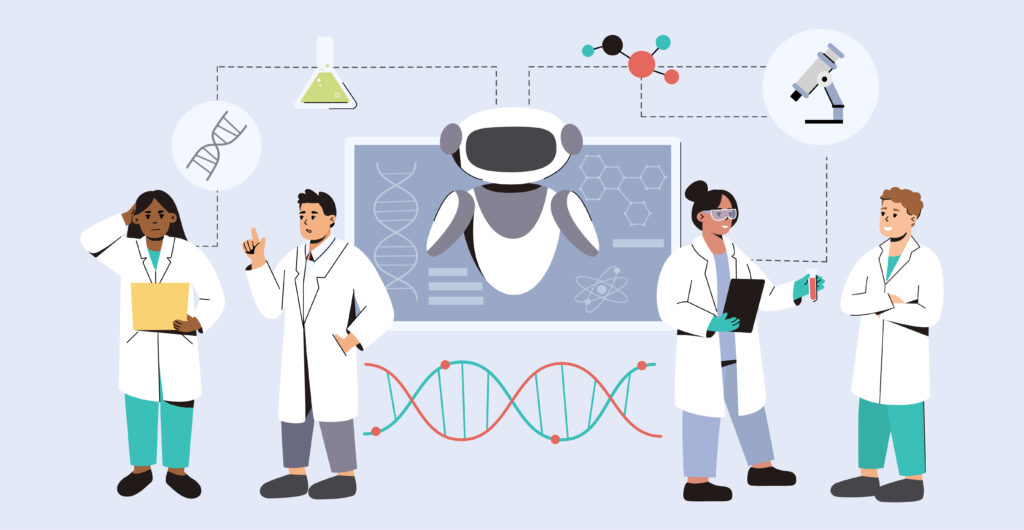
The healthcare industry is experiencing a major digital transformation, and artificial intelligence in healthcare is becoming one of the most discussed advancements. From improving clinical documentation to automating administrative tasks, AI is changing how healthcare organizations operate.
One question that concerns many professionals is: Will AI replace medical coders in the future?
AI is unlikely to completely replace medical coders, but it will significantly transform their roles. Instead of manually reviewing every patient record, future medical coders may work alongside AI systems to verify codes, handle complex cases, improve accuracy, and ensure compliance.
AI-powered medical coding tools are already being introduced to assist healthcare organizations by analyzing medical documentation, suggesting ICD-10 and CPT codes, and reducing repetitive work. However, human expertise remains essential because medical coding requires clinical understanding, judgment, and knowledge of constantly changing healthcare regulations.
What Is Medical Coding and Why Is It Important?
Medical coding is the process of converting healthcare information, such as diagnoses, procedures, treatments, and medical services, into standardized codes used for billing, insurance claims, healthcare analytics, and compliance.
Medical coders work with coding systems such as:
- ICD-10-CM for diagnoses
- CPT codes for medical procedures and services
- HCPCS codes for healthcare supplies and additional services
Accurate medical coding ensures that:
- Healthcare providers receive correct reimbursement
- Insurance claims are processed efficiently
- Patient records remain standardized
- Healthcare organizations maintain regulatory compliance
A small coding mistake can lead to claim denials, delayed payments, compliance risks, or inaccurate healthcare data.
How Is AI Changing Medical Coding?
AI in medical coding uses technologies such as:
- Machine learning
- Natural language processing (NLP)
- Generative AI
- Automated coding software
- Clinical data analysis
These technologies can analyze large amounts of medical documentation and identify important information from patient records.
For example, AI medical coding software can:
- Read electronic health records (EHRs)
- Identify diagnoses and procedures
- Suggest appropriate ICD-10 codes
- Detect missing documentation
- Highlight possible coding errors
Modern AI systems are becoming better at understanding medical terminology and structured healthcare data. However, current research highlights challenges related to accuracy, transparency, privacy, and the need for human review before final coding decisions.
Will AI Replace Medical Coders Completely?
The future of medical coding is expected to be a human-AI collaboration model.
AI can perform repetitive tasks quickly, but medical coding involves more than matching words with codes. Professional coders must understand:
- Clinical context
- Physician documentation
- Coding guidelines
- Insurance requirements
- Compliance regulations
- Complex patient conditions
For example, an AI system may identify a possible diagnosis code, but a certified medical coder must determine whether the documentation actually supports that code.
Human review is especially important in:
- Complex surgeries
- Multiple chronic conditions
- Inpatient coding
- Ambiguous documentation
- Audit situations
AI can recommend, but experienced coders make the final decision.
How AI Will Transform the Role of Medical Coders
Instead of eliminating medical coding jobs, AI will likely change the responsibilities of medical coding professionals.
Future medical coders may become:
1. AI Coding Review Specialists
Medical coders will review AI-generated coding suggestions and verify accuracy before submission.
Their role will shift from:
“Finding every code manually”
to:
“Validating and improving AI-generated coding decisions.”
2. Coding Auditors
As AI handles routine cases, human experts will focus more on:
- Quality assurance
- Compliance audits
- Error detection
- Documentation improvement
This will increase the importance of advanced coding knowledge.
3. Healthcare Data Specialists
Medical coders with knowledge of:
- Revenue cycle management
- Healthcare analytics
- AI tools
- Clinical documentation improvement
will have stronger career opportunities.
As healthcare professionals continue adopting AI technologies, digital learning and knowledge-sharing methods are also becoming more important. Many organizations use YouTube video cutter to create short educational clips from webinars, training sessions, and healthcare presentations.
Benefits of AI in Medical Coding
1. Faster Coding Processes
Traditional medical coding can require significant time, especially when reviewing lengthy patient records.
AI automation can analyze documentation quickly and provide coding recommendations, helping healthcare organizations improve workflow efficiency.
2. Improved Coding Accuracy
AI systems can identify patterns across thousands of records and help reduce common human errors.
They can assist with:
- Missing codes
- Incorrect code selection
- Documentation gaps
- Duplicate entries
However, accuracy still depends on proper validation and oversight.
3. Reduced Administrative Workload
Healthcare professionals often spend significant time handling documentation and administrative activities.
AI tools can reduce repetitive tasks and allow medical coders to focus on higher-value responsibilities.
4. Better Revenue Cycle Management
Accurate coding directly impacts healthcare revenue.
AI-assisted coding can help organizations:
- Reduce claim denials
- Improve reimbursement processes
- Identify documentation issues
- Optimize billing workflows
Limitations of AI Medical Coding Systems
Although AI has great potential, it still has important limitations.
1. Lack of Human Judgment
Healthcare documentation is often complex.
A patient record may contain incomplete information, unclear terminology, or multiple possible interpretations.
Human coders can analyze context better in these situations.
2. Changing Coding Regulations
Healthcare coding rules frequently change.
AI systems require continuous updates to remain accurate and compliant.
3. Data Privacy Concerns
Medical records contain sensitive patient information.
Healthcare organizations must ensure AI systems follow:
- Data security standards
- Privacy regulations
- Compliance requirements
4. AI Errors and Hallucinations
Generative AI models may sometimes produce incorrect suggestions.
For this reason, healthcare organizations still require professional review before submitting claims.
What Skills Will Medical Coders Need in the AI Future?
Medical coding professionals who adapt to technology will remain valuable.
Future-ready medical coders should develop skills in:
Healthcare AI Tools
Understanding AI-assisted coding platforms will become increasingly important.
Advanced Coding Knowledge
Strong knowledge of:
- ICD-10-CM
- CPT
- HCPCS
- Compliance guidelines
will remain essential.
Medical Documentation Analysis
Coders will need stronger skills in reviewing clinical notes and identifying documentation issues.
Data and Analytics Skills
Knowledge of healthcare data management and revenue cycle processes will create more career opportunities.
AI vs Human Medical Coders: Who Performs Better?
| Task | AI Capability | Human Advantage |
| Reviewing large records | Excellent | Limited speed |
| Finding patterns | Excellent | Moderate |
| Understanding context | Improving | Strong |
| Handling complex cases | Limited | Strong |
| Compliance judgment | Limited | Strong |
| Final responsibility | No | Yes |
The future will not be AI versus humans. It will be AI working with skilled healthcare professionals.
The Future of Medical Coding Jobs
The demand for healthcare data management continues to grow. While some repetitive coding tasks may become automated, new opportunities will appear in areas such as:
- AI coding validation
- Medical auditing
- Clinical documentation improvement
- Healthcare analytics
- Revenue cycle optimization
Medical coders who learn how to use AI technology will likely have an advantage over those who avoid digital transformation.
How Healthcare Organizations Should Prepare for AI Medical Coding
Organizations should focus on:
1. Implementing AI as an Assistance Tool
AI should support medical coders rather than remove human oversight.
2. Training Coding Teams
Employees should receive training on AI platforms and updated workflows.
3. Maintaining Quality Control
Regular audits should ensure AI-generated codes meet compliance standards.
4. Combining Technology With Expertise
The strongest results will come from combining AI efficiency with human medical knowledge.
Final Thoughts: Will AI Replace Medical Coders?
The future answer to “Will AI Replace Medical Coders?” is not a simple yes or no.
AI will automate many repetitive coding activities, improve efficiency, and change how medical coding teams operate. However, experienced medical coders will continue to play a critical role in reviewing complex cases, ensuring compliance, and making professional decisions.
The future of medical coding is not about replacing humans with machines. It is about creating a smarter healthcare workflow where AI handles repetitive tasks and medical coding professionals provide expertise, accuracy, and human judgment.
Medical coders who embrace AI technology will be better positioned for the future of healthcare.
Frequently Asked Questions
1. Will AI replace medical coders completely in the future?
No, AI is unlikely to completely replace medical coders. Instead, AI will automate repetitive tasks and help coders work faster while humans continue handling complex decisions, compliance reviews, and quality checks.
2. How is AI used in medical coding?
AI is used in medical coding to analyze medical records, identify diagnoses and procedures, suggest ICD-10 and CPT codes, detect documentation issues, and support coding accuracy.
3. Is AI medical coding software accurate?
AI medical coding software can improve efficiency and accuracy, but it still requires human review. Complex cases and unclear documentation often require professional coder judgment.
4. Will medical coding jobs disappear because of AI?
Medical coding jobs are expected to evolve rather than disappear. Coders may transition into roles involving auditing, AI validation, compliance, and healthcare data management.
5. What skills should medical coders learn for the future?
Medical coders should learn AI-assisted coding tools, advanced ICD-10 and CPT coding, healthcare compliance, documentation analysis, and healthcare data management.
6. Can AI code ICD-10 and CPT codes automatically?
AI systems can suggest ICD-10 and CPT codes automatically by analyzing medical documentation, but final approval usually requires human verification.
7. What are the biggest challenges of AI in medical coding?
Major challenges include accuracy verification, data privacy, changing coding guidelines, lack of transparency, and handling complex medical situations.
8. How will AI affect medical billing and coding careers?
AI will reduce repetitive manual work and create opportunities for coders to focus on higher-level tasks such as auditing, compliance, and revenue cycle improvement.
9. Should medical coders learn artificial intelligence?
Yes. Learning how AI tools work can help medical coders remain competitive and improve their productivity in a changing healthcare environment.
10. What is the future of medical coding?
The future of medical coding will involve collaboration between AI systems and healthcare professionals, where automation improves efficiency while human expertise ensures accuracy and compliance.
Our specialists reduce denials and speed up reimbursements. Get a free review of your revenue cycle.